Table Of Contents
Commercial Cleaning for Offices: Services, Costs, Checklist
Commercial cleaning for offices means hiring a professional service to maintain your workspace through regular cleaning, sanitizing, and facility maintenance. These teams handle everything from daily janitorial tasks like vacuuming and trash removal to specialized services such as carpet deep cleaning, window washing, and disinfection. Unlike residential cleaning, commercial office cleaning operates on contract schedules, uses industrial equipment, and follows protocols designed for high traffic business environments.
This guide breaks down everything you need to know before hiring an office cleaning company. You'll learn how to plan cleaning schedules that fit your operations, review a comprehensive checklist of services most providers offer, understand typical pricing structures and costs, and discover the right questions to ask during vendor selection. Whether you manage a small startup office or oversee a multi floor corporate building, you'll finish this article knowing exactly what to expect from a commercial cleaning partnership and how to choose the right provider for your specific needs and budget.
Why commercial office cleaning matters
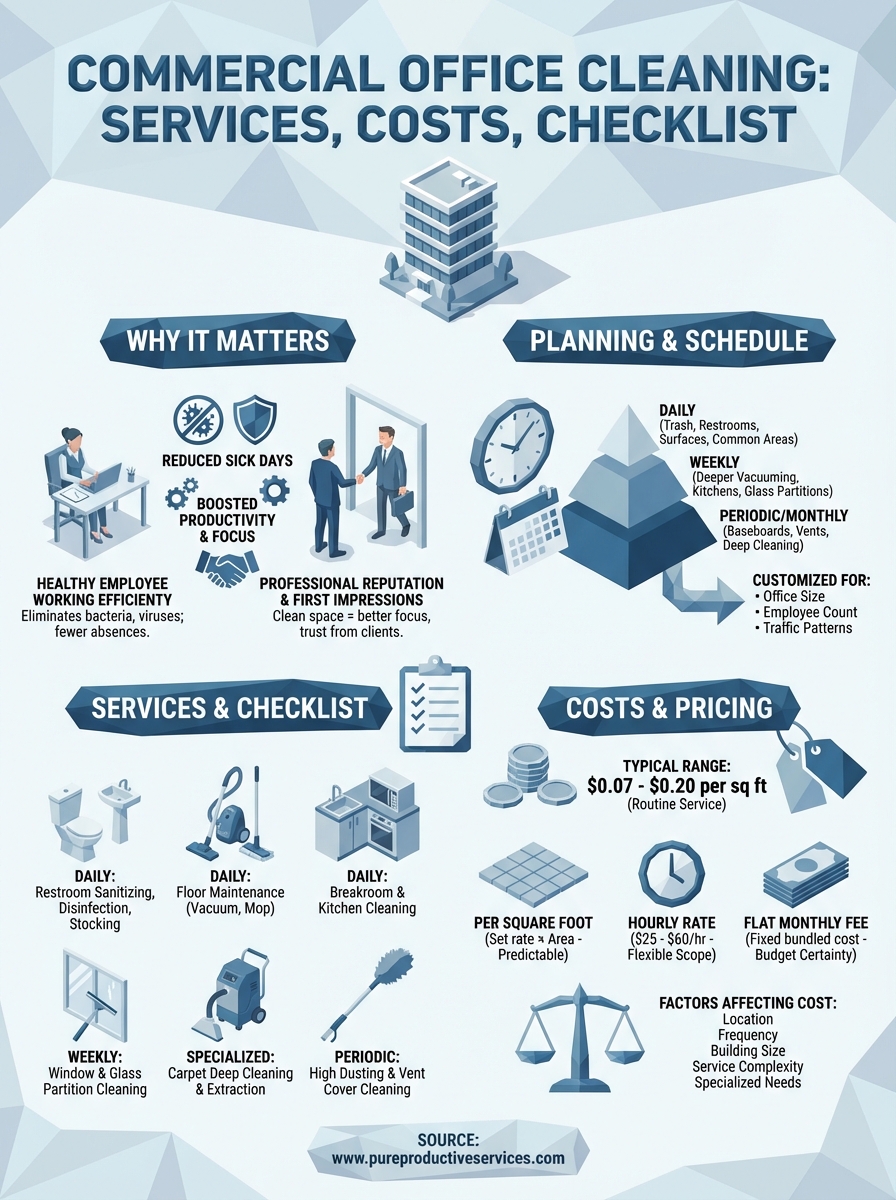
Your workspace conditions directly affect employee health, business productivity, and client perceptions. A professionally maintained office reduces employee sick days by eliminating the bacteria, viruses, and allergens that accumulate on shared surfaces and in carpet fibers. Dusty air vents, unsanitized restrooms, and dirty break rooms create health hazards that spread illness quickly across your team. Beyond the health implications, your office appearance sends immediate signals about your company's professionalism and standards when prospects, partners, or customers walk through your door.
Productivity and professional reputation impacts
Clean environments boost workplace performance in measurable ways. Employees work more efficiently in organized, sanitized spaces where they aren't distracted by clutter, unpleasant odors, or concerns about touching contaminated surfaces. Studies show that workplace cleanliness correlates directly with focus levels and job satisfaction. Your team spends over 40 hours per week in your office, and their comfort affects output quality and retention rates.

Client-facing considerations matter equally for your bottom line. First impressions form within seconds of a visitor entering your space, and stained carpets, fingerprint-covered glass doors, or overflowing trash bins damage credibility instantly. Regular commercial cleaning for offices maintains the polished appearance that reinforces your brand standards and competitive positioning. Professional cleaning protocols ensure your space consistently reflects the quality standards you promise in your products or services, building trust before conversations even begin.
A clean office environment reduces sick days, increases productivity, and creates positive first impressions that strengthen your professional reputation.
How to plan and schedule office cleaning
Effective cleaning schedules balance your operational needs with the maintenance requirements of your specific workspace. Your planning process starts with evaluating your office size, employee count, and traffic patterns to determine cleaning intensity and frequency. A 5,000 square foot office with 20 employees requires different protocols than a 50,000 square foot building with 200 workers. Document your current pain points like restroom conditions by midday, conference room messes after meetings, or breakroom cleanliness issues, since these observations guide your service specifications and schedule design.
Assess your office's specific cleaning needs
Your space characteristics determine service requirements more than generic industry standards. High traffic areas like lobbies, restrooms, and kitchen spaces need daily attention, while private offices and storage rooms function well with weekly or biweekly service. Consider your industry's unique demands: medical offices require hospital-grade disinfection, financial firms need secure document handling procedures, and creative agencies may want flexible scheduling around project deadlines. Walk through your entire facility during peak hours and end-of-day to identify problem zones that accumulate dirt, clutter, or require specialized equipment. Make notes about carpet conditions, window accessibility, floor types, and any areas with sensitive equipment that cleaning teams must navigate carefully.
Choose the right cleaning frequency
Most commercial cleaning for offices operates on tiered schedules combining daily, weekly, and monthly tasks. Daily services typically cover trash removal, restroom sanitizing, surface wiping, and floor maintenance in common areas, ensuring your space stays functional and presentable throughout the workweek. Weekly tasks include deeper vacuuming, kitchen appliance cleaning, and glass partitions, addressing buildup that daily maintenance doesn't fully eliminate. Monthly deep cleaning tackles baseboards, light fixtures, vent covers, and other surfaces that accumulate grime gradually. Match your frequency to usage intensity: call centers with 24/7 operations need more frequent service than law offices with standard business hours and limited client visits.
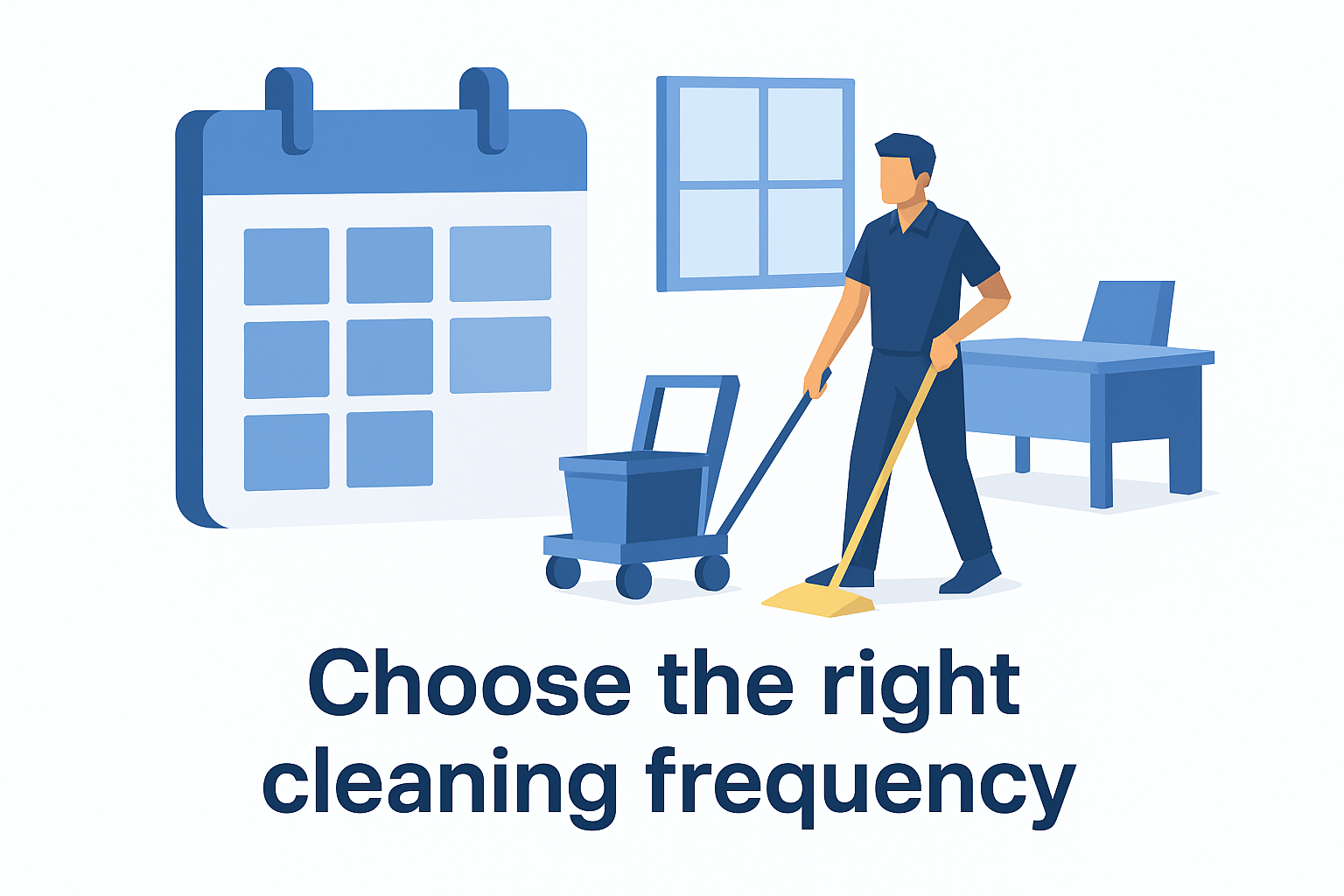
Your cleaning schedule should align with your office traffic patterns, industry requirements, and the specific challenges your space faces daily.
Coordinate timing with business operations
Scheduling determines whether cleaning enhances or disrupts your operations. After-hours cleaning prevents service interruptions and protects confidential materials, making it the standard choice for most offices. Your cleaning team works evenings or overnight when employees have left and secure areas stay locked. Day porter services work during business hours for immediate response to spills, restroom checks throughout the day, and lobby maintenance that keeps client-facing areas pristine. Some businesses split services: nightly cleaning for private spaces and day porters for public zones. Communicate your schedule constraints clearly, including security protocols, alarm systems, and any restricted access periods that affect when cleaners can operate.
Office cleaning services and task checklist
Commercial cleaning for offices encompasses a broad range of services that maintain your workspace at different intervals and intensity levels. Understanding which tasks happen daily versus monthly helps you evaluate vendor proposals accurately and ensures you're not paying for services you don't need or missing critical cleaning areas. Professional cleaning companies typically organize services into tiered categories: routine maintenance that keeps your office functional day-to-day, periodic deep cleaning that addresses accumulated grime, and specialized services that require equipment or expertise beyond standard janitorial work. This breakdown shows you exactly what each service level includes and when your cleaning team performs specific tasks.
Daily cleaning tasks
Your daily service package forms the foundation of office cleanliness by addressing high-traffic zones and frequently touched surfaces. Restroom sanitization happens every day and includes disinfecting toilets, sinks, mirrors, door handles, and dispensers, plus restocking paper products and soap. Common area maintenance covers lobby floors, reception desks, conference rooms, and break rooms, where cleaning teams empty trash bins, wipe down surfaces, spot-clean spills, and vacuum carpets or mop hard floors. Professional cleaners disinfect shared surfaces like door handles, light switches, elevator buttons, and stair railings that transmit germs between employees throughout your workday.
Kitchen and breakroom service addresses one of the dirtiest zones in most offices. Daily tasks include cleaning countertops, sinks, microwave interiors and exteriors, refrigerator handles, and coffee station areas where spills and food residue accumulate quickly. Cleaning teams remove trash, replace liners, and wipe down tables and chairs after employee use. Some companies include dishwashing services if you provide dishes rather than disposables, though this typically costs extra.
Weekly and periodic cleaning services
Weekly cleaning tackles areas that don't need daily attention but deteriorate noticeably without regular maintenance. Thorough vacuuming of all carpeted areas removes embedded dirt that daily spot cleaning misses, including under desks, along baseboards, and in corners. Window and glass partition cleaning eliminates fingerprints, smudges, and dust buildup that clouds your office appearance and reduces natural light. Dusting services cover surfaces above waist height like window sills, shelving units, picture frames, and decorative elements that daily cleaning doesn't reach.
Monthly deep cleaning addresses zones that accumulate grime gradually over time. Baseboards, door frames, and wall spots near switches get wiped down to remove scuff marks and accumulated dust. Vent covers and air return grilles receive cleaning since dust buildup affects air quality and HVAC efficiency. Floor care intensifies with carpet shampooing or extraction in high-traffic zones, hard floor stripping and waxing for tile or vinyl surfaces, and wood floor polishing if applicable. Light fixtures, ceiling fans, and high surfaces get dusted or washed depending on accessibility and buildup levels.
Your cleaning checklist should clearly define which tasks happen daily, weekly, and monthly to prevent gaps in service and ensure consistent results.
Specialized office cleaning services
Beyond routine maintenance, specialized services address specific challenges or facility requirements. Carpet deep cleaning uses extraction equipment to remove stains, odors, and allergens that regular vacuuming leaves behind, typically scheduled quarterly or semi-annually depending on traffic levels. Window washing for multi-story buildings requires trained technicians with safety equipment and insurance coverage for exterior glass cleaning. Hard floor restoration strips away old wax layers and reapplies protective coatings that maintain appearance and durability, usually performed annually or when floors show visible wear.
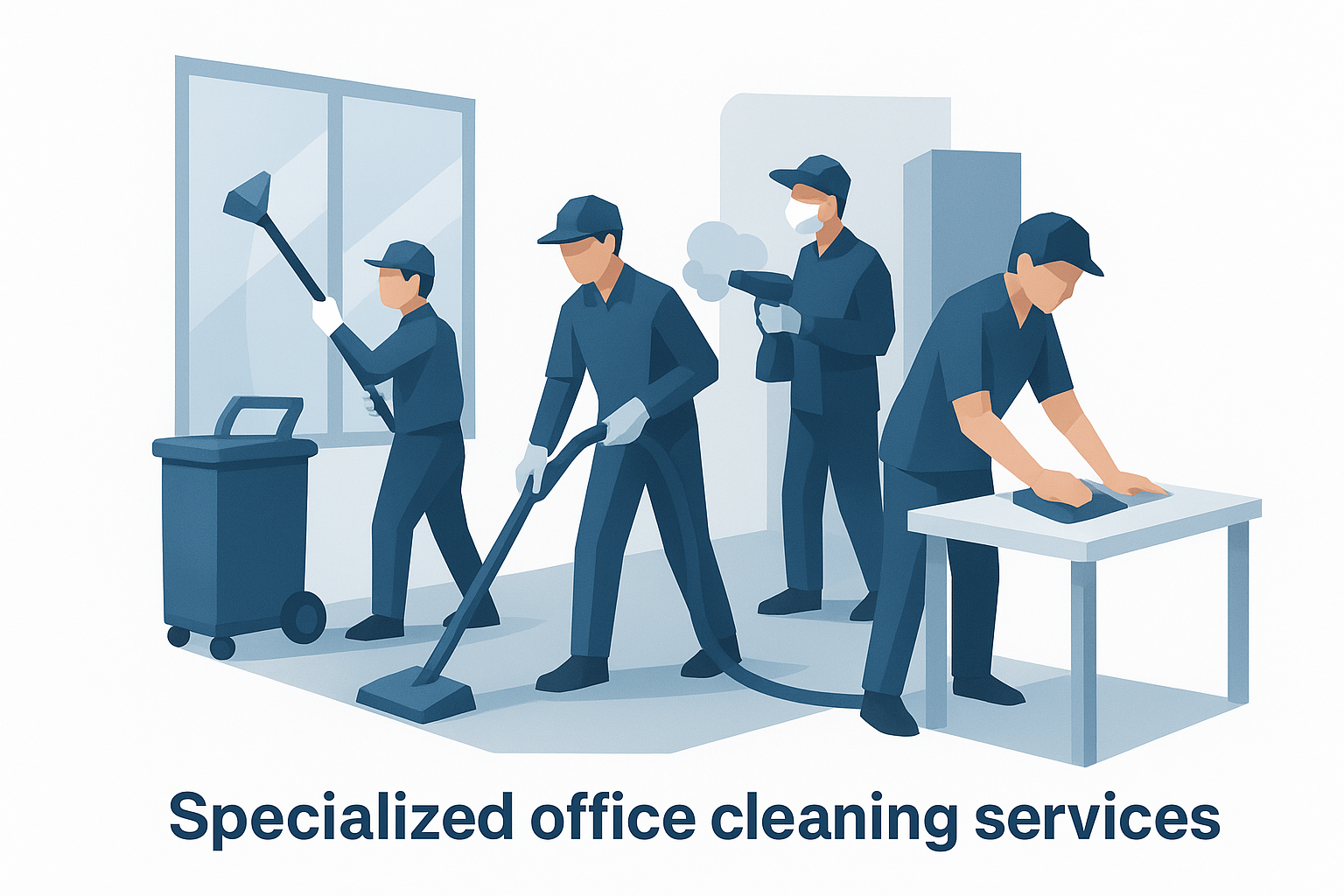
Disinfection services have expanded significantly, particularly in healthcare-adjacent industries or during illness outbreaks. Electrostatic spraying covers large surface areas quickly with EPA-approved disinfectants that kill viruses and bacteria on contact. Post-construction cleaning removes dust, debris, and residue after renovation projects, requiring specialized equipment and protocols different from standard janitorial work. Upholstery and furniture cleaning addresses fabric chairs, couches in waiting areas, and partition panels that trap dust and allergens. Emergency cleaning responds to urgent situations like water damage, biohazard spills, or storm cleanup that demand immediate professional attention outside your regular schedule.
Commercial office cleaning costs and pricing
Commercial cleaning for offices typically costs between $0.07 and $0.20 per square foot for routine service, though your actual expenses depend on multiple factors including location, service frequency, and task complexity. Most cleaning companies structure pricing through per-square-foot rates, hourly billing, or flat monthly fees based on your specific requirements and facility characteristics. Understanding these pricing models and the variables that influence costs helps you budget accurately and compare vendor proposals effectively during your selection process.
Common pricing models
Per-square-foot pricing charges a set rate multiplied by your total cleanable area, making it the most predictable option for budgeting purposes. Companies quote rates between $0.05 and $0.25 per square foot depending on service intensity and your geographic market. This model works well for standard office layouts where cleaning teams can establish consistent workflows. Hourly rates range from $25 to $60 per hour per cleaner and suit situations where your needs fluctuate or you want flexibility in service scope. Hourly billing requires clear communication about task priorities since cleaners accomplish only what fits within the booked time window.
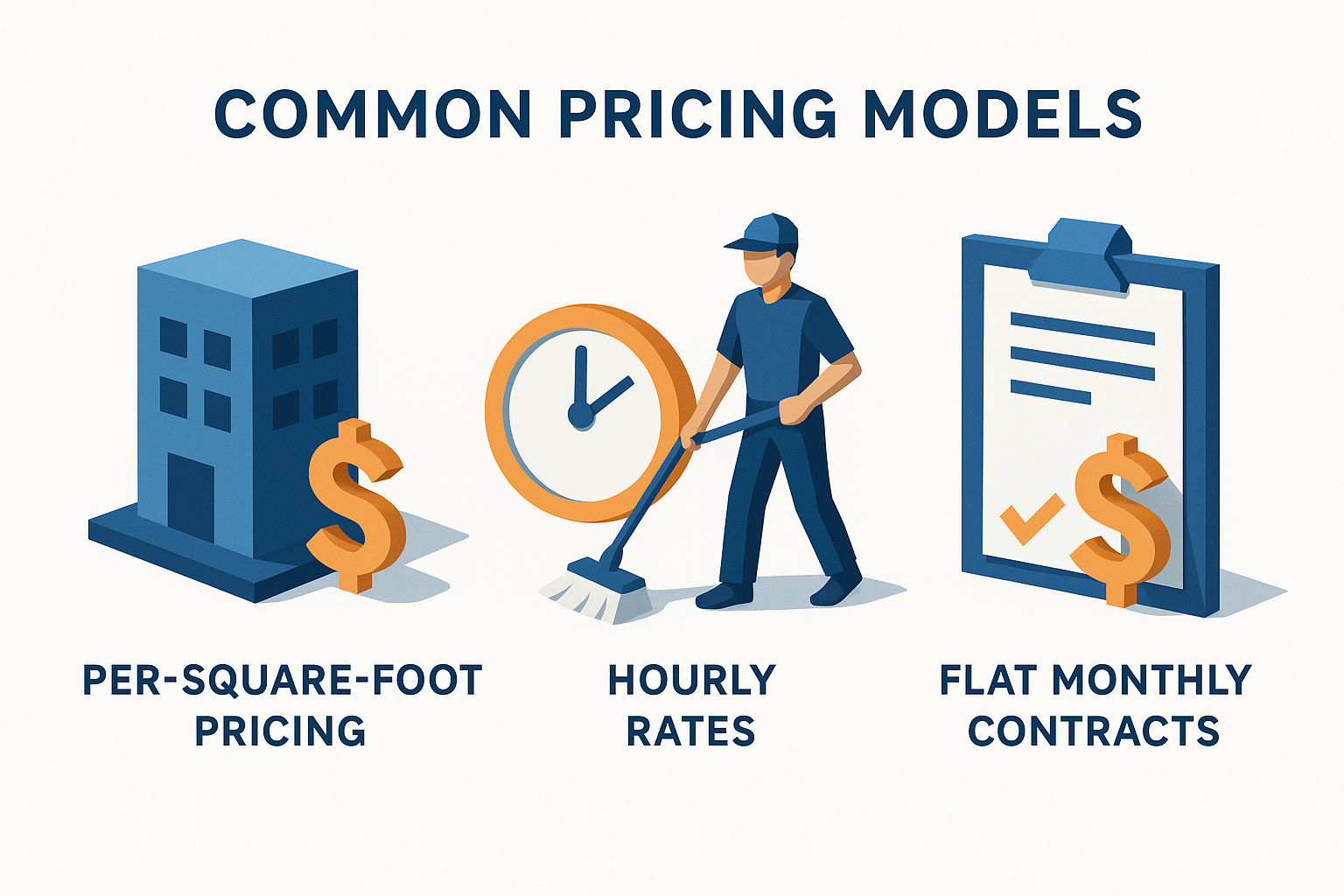
Flat monthly contracts bundle all agreed services into a fixed fee regardless of actual hours worked. Contract pricing typically costs $200 to $2,000 monthly for small to medium offices and scales upward for larger facilities. This approach simplifies accounting and ensures comprehensive service delivery without surprise charges, though you'll pay the same amount even during low-activity periods like holidays or when portions of your office sit vacant.
Your pricing model should match your office's size predictability and your need for budget certainty versus service flexibility.
Factors that affect your cleaning costs
Your office location significantly impacts pricing due to regional labor costs and market competition. Metropolitan areas like New York or San Francisco charge 30% to 50% more than smaller cities for identical services. Building characteristics matter equally: older facilities with dated infrastructure require more time and specialized products than newer construction with modern finishes. High-security buildings add costs through required background checks and badging procedures that cleaning companies pass through to clients.
Service frequency and timing create substantial price variations. Nightly cleaning costs more than twice-weekly service since you're paying for more labor hours and supervisor overhead. After-hours scheduling typically costs 10% to 20% more than daytime cleaning due to shift differential pay for workers and potential security coordination. Specialized services like carpet extraction, window washing above ground level, or medical-grade disinfection add premium charges ranging from $50 to several hundred dollars per service depending on square footage and complexity. Green cleaning products and eco-friendly protocols may increase costs by 5% to 15% over standard chemical-based cleaning, though many companies now include sustainable options at no extra charge due to improved product availability and competitive pressure.
Questions to ask an office cleaning company
Your vendor selection process should include specific questions that reveal whether a cleaning company matches your needs and standards. Asking the right questions upfront prevents misunderstandings about service scope, costs, and responsibilities that create friction after you sign a contract. Focus your inquiries on areas that directly affect your operations: service details, staff qualifications, insurance coverage, and how the company handles problems when they arise. These conversations expose red flags like vague answers, reluctance to provide references, or unrealistic promises that signal potential issues down the road.
Service scope and quality assurance
Ask what specific tasks the company includes in their standard commercial cleaning for offices package and what costs extra. Request a detailed breakdown showing which surfaces they clean, how often they perform each task, and what products they use on different materials in your space. Find out how they train employees, whether they use quality control systems or checklists, and what happens if you're unsatisfied with results. Inquire about their backup staffing plan when your regular cleaners call in sick or leave the company, since inconsistent service disrupts your operations and forces you to train new workers repeatedly on your facility's unique requirements.
Ask detailed questions about service inclusions, staff training, and quality control systems to ensure the company meets your specific standards.
Credentials and problem resolution
Verify that the company carries proper insurance coverage including general liability and workers' compensation. Request copies of current certificates and ask whether their policy limits adequately cover your facility value in case of damage or theft. Check how long they've operated in your market and ask for references from similar-sized offices in your industry. Find out their communication protocol for urgent issues like emergency spills or complaints about specific cleaners, including after-hours contact methods and guaranteed response times for problems requiring immediate attention.
Next steps
You now understand how commercial cleaning for offices works, from planning schedules to evaluating costs and selecting providers. Your next action should be requesting quotes from at least three companies to compare their service offerings, pricing structures, and quality guarantees against your requirements. Prepare a list of your facility details including square footage, employee count, and special needs before contacting vendors, since accurate information produces precise proposals.
If you need professional office cleaning in Philadelphia or surrounding areas, Pure Productive Services provides comprehensive commercial cleaning solutions backed by certified, bonded staff and 13+ years of experience. Their team handles daily janitorial tasks to specialized deep cleaning with flexible scheduling that fits your operations.

