
Table Of Contents
Whether you're opening a new office, managing a retail space, or overseeing a multi-tenant building, at some point you'll need to figure out how commercial cleaning actually works for your specific property. Commercial janitorial services Philadelphia businesses rely on cover a wide range of tasks, and understanding what's typically included and what usually costs extra makes it much easier to compare providers and set realistic expectations from day one.
What Falls Under Commercial Janitorial Services
At the core, janitorial service usually includes trash removal, restroom cleaning and restocking, vacuuming, mopping, dusting, and wiping down high-touch surfaces like doorknobs and light switches. Beyond that baseline, many providers offer add-ons like carpet extraction, window washing, floor stripping and waxing, and power washing exterior walkways. Some businesses need all of this bundled together, while others just need the daily basics with occasional deep cleans layered in. Understanding this range helps you avoid paying for services you don't actually need, or worse, assuming something is included when it isn't.
This guide breaks down the full scope of commercial janitorial work, from the daily basics to specialized add-ons, so you know exactly what to ask for when you start comparing providers.
How Pricing Typically Works
Most commercial cleaning quotes are based on square footage, frequency of visits, and the specific tasks included. A small office visited three times a week will cost less than a large retail space with daily service and specialized floor care. Ask any potential provider for an itemized quote rather than a flat number, so you can see exactly what you're paying for and negotiate line items if your budget is tight. Be cautious of quotes that seem unusually low compared to others you've received that's sometimes a sign of corners being cut on staffing, insurance, or product quality.
Contract length also affects pricing in some cases. Providers may offer a slightly better rate for longer commitments, but make sure you understand cancellation terms before locking into anything beyond a few months, especially if this is your first time working with the company.
Industries With Specific Cleaning Requirements
Not every business has the same needs. Medical offices and healthcare facilities require strict disinfecting protocols to prevent cross-contamination. Schools need cleaning that accounts for allergen control and student safety. Restaurants and food service spaces have their own health code requirements around grease, food prep surfaces, and pest prevention. Industrial buildings and warehouses might need floor care suited for heavy equipment traffic. When comparing janitorial companies Philadelphia businesses in your specific industry actually use, ask directly whether they have experience with your building type; general commercial experience doesn't always translate cleanly to specialized environments.
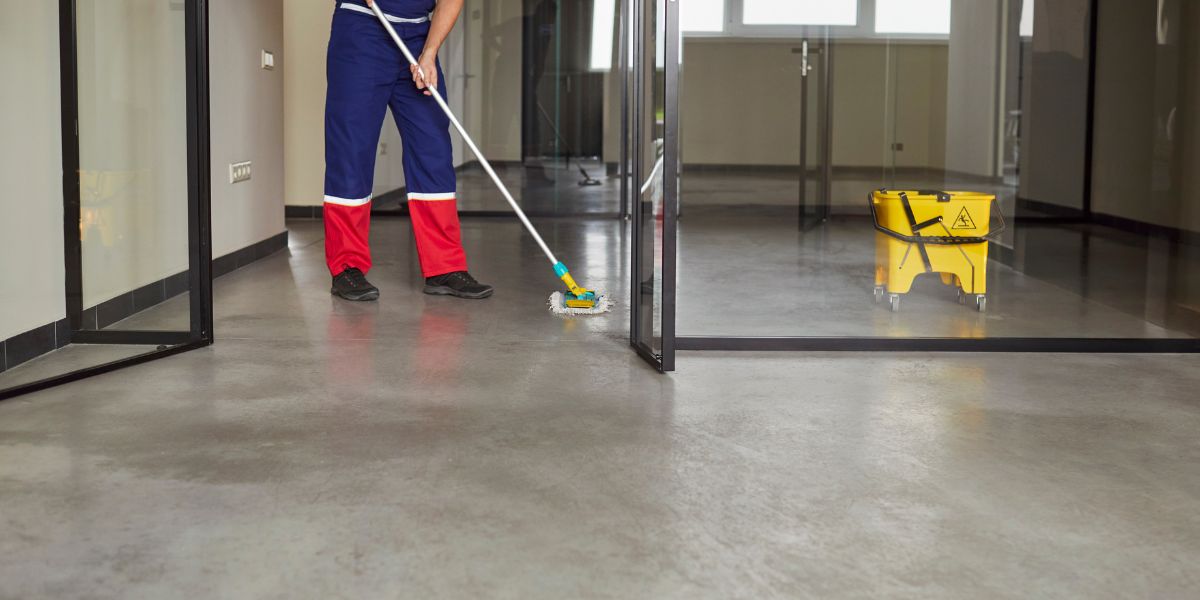
High-security facilities, government buildings, and life science or lab spaces bring their own set of requirements too, from clearance-level staffing to clean-room-specific supplies. If your building falls into one of these categories, narrow your search to providers who can speak to that experience directly rather than learning on the job at your expense.
Office Cleaning Basics Every Business Should Expect
For a standard office environment, day-to-day service should cover desks, common areas, kitchens or break rooms, and restrooms at minimum. Office cleaning also often includes trash and recycling management, glass and window spot cleaning, and periodic deep cleans of carpets or upholstery. If your office has shared equipment like printers or kitchen appliances, ask whether those get included in the regular wipe-down rotation or if that's something you need to request separately.
Post-Construction and One-Time Cleaning Needs
Beyond routine service, many janitorial cleaning company providers also handle one-time jobs like post-construction cleanup, move-in and move-out cleaning, or event cleanup after a large gathering. These jobs typically require different equipment and staffing levels than a standard visit, so pricing and scheduling work differently. If you anticipate needing this kind of service occasionally say, after a renovation or before a big event it's worth asking your regular provider whether they offer it, since working with a company already familiar with your building can simplify the process considerably. Providers who list post-construction cleanup alongside their regular janitorial offerings tend to have the equipment ready to handle both without a gap in coverage.
Staffing, Insurance, and Vetting Standards
Before a cleaning crew sets foot in your building, it's worth understanding who's actually doing the work. Established providers background check and drug test their staff, carry general liability insurance, and often bond employees who work in sensitive environments. This matters most for businesses with after-hours cleaning, where staff have building access without anyone else present. Ask specifically about hiring standards and insurance coverage during your initial conversation rather than assuming it's a given not every provider holds itself to the same standard.
Choosing Between Daily, Weekly, or Custom Schedules
Frequency should match your actual foot traffic, not just a default package. High-traffic offices or retail locations usually benefit from daily service, while smaller spaces with light use might only need two or three visits a week. Some businesses across the city combine a lighter daily touch-up with a more thorough deep clean once a week or once a month. Talk through your building's actual patterns with a potential provider rather than defaulting to whatever package is listed first on their website.
What to Ask Before Signing a Contract
Before committing, get clarity on a few key points: what exactly is included in the base price, how substitutions are handled if a scheduled cleaner is out sick, what the cancellation or adjustment policy looks like, and whether staff are background-checked and insured. Pure Productive Services and similarly established providers should be able to answer all of these clearly and put the details in writing. If a company hesitates on any of these questions, treat that as useful information going into your decision. Most established providers make this easy by outlining their process directly so you know what to expect before the first visit.
Commercial cleaning isn't one-size-fits-all, and the right setup depends heavily on your building, your industry, and how much traffic your space actually sees day to day. Taking the time to understand what's typically included and what to ask for specifically puts you in a much better position to choose a provider that actually fits.
Once you've narrowed down a shortlist, ask each company for a walkthrough of your actual space before finalizing a quote. What looks straightforward on paper sometimes changes once a provider sees the layout, the traffic flow, and any unique fixtures or finishes that need particular care. That extra step usually results in a more accurate proposal and fewer surprises once the contract starts.
FAQs
1. What's typically included in a basic commercial janitorial service package?
Most base packages include trash removal, restroom cleaning, vacuuming, mopping, dusting, and wiping down common surfaces. Specialized services like carpet extraction or window washing are usually billed as add-ons.
2. How is commercial cleaning priced?
Pricing is generally based on square footage, cleaning frequency, and the specific tasks requested. Always ask for an itemized quote so you understand exactly what's covered.
3. Do commercial janitorial companies work outside normal business hours?
Yes, most offer evening or overnight cleaning specifically so the work doesn't disrupt daily operations. This is especially common for offices and retail spaces.
4. Can I get a customized cleaning schedule for my building?
Most reputable providers will build a schedule around your specific traffic patterns rather than forcing a standard package, especially once they've done a walkthrough of your space.
5. What industries require specialized commercial cleaning protocols?
Healthcare facilities, schools, restaurants, and industrial buildings all have specific requirements around disinfecting, allergen control, or food safety that go beyond standard office cleaning.
6. Is it common to use one company for both routine cleaning and one-time deep cleans?
Yes, many businesses prefer this since the provider is already familiar with the building layout and specific needs, which usually makes one-time jobs like post-construction cleanup go more smoothly.

