
Table Of Contents
If you've been putting off booking deep cleaning services in Philadelphia because you're not sure who to trust with the job, you're not alone. Between busy schedules and a crowded market of cleaning companies, finding a crew that actually shows up, does thorough work, and treats your space with care can feel like guesswork. The good news is that once you know what separates a solid deep cleaning company from a mediocre one, the search gets a lot easier. Here's what to look for, what to ask, and how to spot a company that's worth your money - whether you're cleaning an office, a retail space, or a multi-unit property.
What Deep Cleaning Actually Covers
A lot of people confuse deep cleaning with a standard weekly tidy-up, but the two aren't close. Regular cleaning keeps surfaces wiped and floors swept. Deep cleaning goes underneath, behind, and inside - baseboards, vents, grout lines, appliance interiors, the corners nobody gets to on a normal week. It's the kind of clean that resets a space rather than just maintaining it.
This matters for businesses especially. Office break rooms, retail floors, and shared restrooms build up grime in places that don't show on the surface until they're already a problem. A deep clean catches that buildup before it turns into odors, stains, or a health code issue. If your space hasn't had one in a few months, it's probably due.
Signs Your Space Needs a Deep Clean
You don't need a calendar reminder to know when it's time. A few common signs: lingering smells that air fresheners can't fix, grout that's gone gray no matter how often it's mopped, dust that reappears within days of cleaning, or carpets that look tired even after vacuuming. High-traffic areas - entryways, break rooms, restrooms - tend to show wear first.
Seasonal changes are another good trigger. Many Philadelphia businesses schedule a deep clean at the start of spring and again before the holiday rush, when foot traffic spikes and first impressions matter more. If you're managing a property with move-in or move-out turnover, that's also a natural point to bring in a deep cleaning crew rather than trying to catch up with routine cleaning alone.
What to Look for When Hiring
Not every cleaning company that advertises "deep cleaning" actually delivers it. A few things worth checking before you sign anything:
Licensing and insurance. Any company sending staff into your building should carry general liability coverage and be able to show proof without you having to ask twice.
Background-checked staff. Especially for commercial spaces, you want a company that vets who's actually walking through your doors.
A clear scope of work. Ask what's included - floors, vents, high-touch surfaces, restrooms - and get it in writing so there's no confusion later.
Experience with your type of space. A deep clean for a restaurant kitchen looks different from one for a dental office. Companies with experience across industries tend to anticipate problems before they come up.
It's also worth asking whether the company handles related services, since needs often overlap. If you've recently finished a renovation, for example, standard deep cleaning isn't quite the same as post construction cleaning services, which deal with drywall dust, adhesive residue, and debris that a normal deep clean crew might not be equipped for. A company that offers both post-construction cleaning and standard deep cleaning can usually tell you which one your space actually needs.
Questions to Ask Before Booking a Cleaning Service
Before committing, a short phone call can save you a lot of hassle. Ask how they price the job - by square footage, by room, or a flat rate - so there are no surprises on the invoice. Ask what products they use, especially if anyone in your space has allergies or sensitivities; a company offering carpet cleaning with eco-friendly options is worth noting if that matters to you.
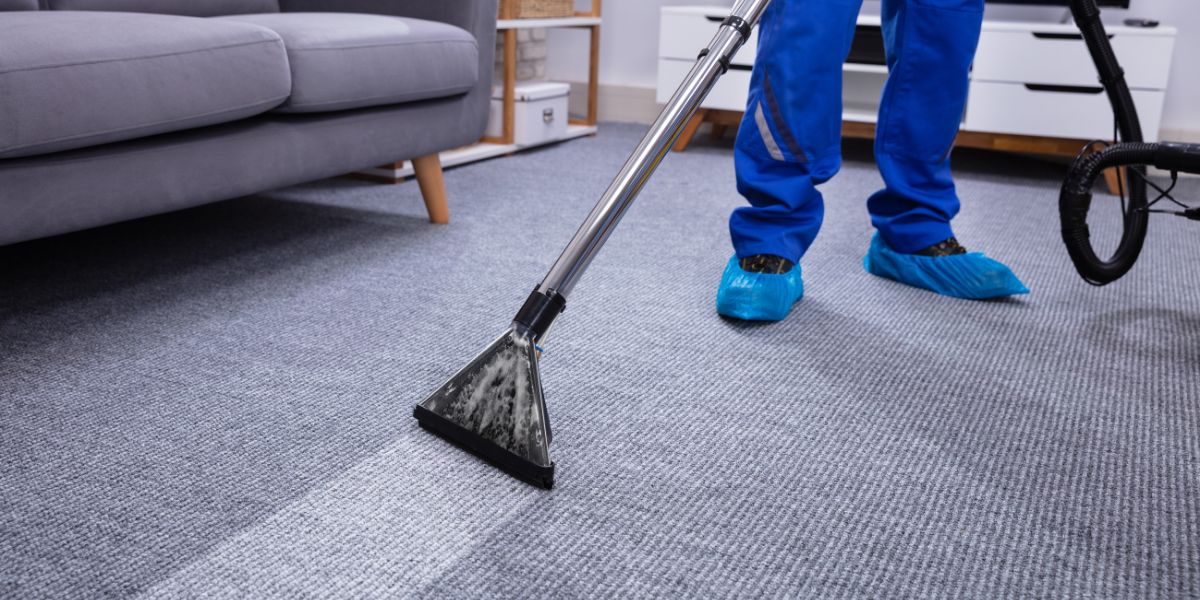
Ask how long the job typically takes for a space your size, and whether they can work around your hours so you're not shutting down operations to get it done. If you're comparing multiple quotes, ask each company the same questions so you're actually comparing apples to apples instead of guessing based on price alone.
Finally, ask about guarantees. A company confident in its work will usually offer to come back and fix anything that doesn't meet expectations rather than just cashing the check and moving on.
How Philadelphia's Buildings Change the Job
Philadelphia's mix of century-old rowhomes, converted warehouses, and newer commercial builds means no two deep cleaning jobs look quite the same. Older buildings often have original hardwood, plaster walls, and radiator systems that collect dust differently than newer HVAC setups. A crew unfamiliar with older construction might use the wrong products on delicate surfaces or miss dust traps that are specific to older heating systems.
Humidity swings between Philadelphia's summers and winters also play a role. Damp summer months can encourage mildew in restrooms and basements, while dry winter heat kicks up dust that settles into vents and upholstery. A company that's worked across the city for years tends to adjust its approach depending on the season and building type, rather than running the same checklist everywhere. That local experience is one of the simpler ways to tell an established company apart from one that's newer to the area.
What a Professional Visit Looks Like
A well-run deep cleaning appointment starts with a walkthrough - the crew lead confirms scope, flags anything unusual (water damage, pest issues, areas needing extra attention), and sets a rough timeline. From there, the team typically works top to bottom: dusting high surfaces and vents first so debris doesn't resettle on freshly cleaned floors, then moving into detailed work on grout, baseboards, and fixtures, and finishing with floor care.
Pure Productive Services approaches deep cleaning jobs this way, with crews trained to move systematically through a space rather than skipping around. That structure is part of what keeps results consistent - you shouldn't have to wonder whether the crew hit every corner or just the visible ones. Office managers, property teams, and building owners tend to value that consistency most, since it means less time double-checking work after the crew leaves.
If your space touches high-traffic industries like office environments, the standards are usually higher still - shared surfaces get more scrutiny, and a thorough deep clean helps keep sick days and complaints down.
Deep cleaning isn't something you need every week, but when it's time, hiring the right team makes the difference between a space that feels genuinely fresh and one that just looks okay on the surface. Take the time to ask the right questions, check references, and confirm the scope in writing, and you'll end up with a crew you can call again without a second thought instead of starting the search over every time. If you're ready to get a quote, reach out and describe your space - most companies can give you a rough estimate before ever stepping foot on site, and a quick walkthrough can usually confirm the rest.
FAQs
1. How often should a business get a deep clean?
Most commercial spaces benefit from a deep clean every three to six months, depending on foot traffic. High-traffic spaces like restaurants or gyms often need it more frequently, while quieter offices can usually stretch the interval a bit longer.
2. Is deep cleaning more expensive than regular cleaning?
Yes, typically, since it covers more ground and takes longer per visit. Most companies price it separately from routine maintenance cleaning, either by square footage or as a flat project rate.
3. Can deep cleaning be done outside business hours?
Most cleaning companies offer evening or weekend scheduling specifically so operations aren't disrupted. It's worth confirming this upfront if uninterrupted business hours matter to you.
4. What's the difference between deep cleaning and post-construction cleaning?
Deep cleaning addresses buildup in an already-functioning space, while post-construction cleaning is built to handle dust, debris, and residue left behind after renovation or building work. They require different equipment and techniques.
5. Do I need to provide cleaning supplies?
No, reputable companies bring their own equipment and products, including any eco-friendly options if requested in advance.
6. How do I know if a quote is fair?
Compare at least two or three quotes for the same scope of work. If one quote is dramatically lower, ask what's excluded - it's often a sign that certain tasks aren't included in the base price.

